
Dining Venues and Options
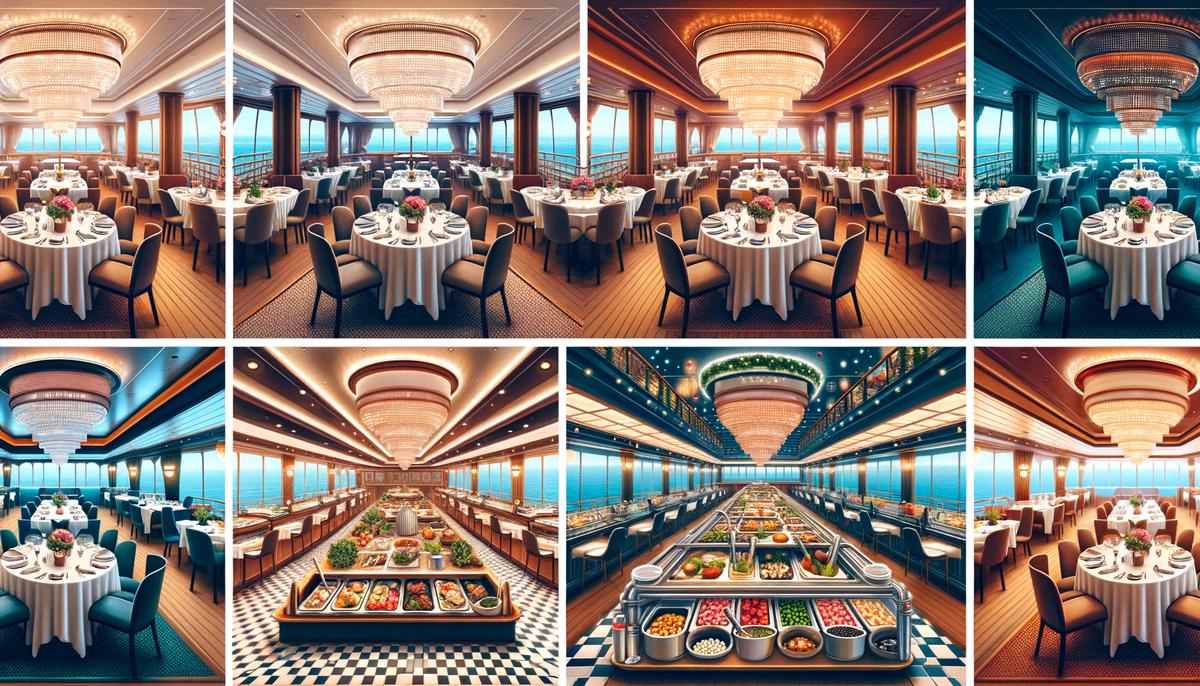
Cruise ships offer a range of dining choices. The main dining room provides a changing menu with attentive service. Buffets offer variety with casual attire allowed. Specialty restaurants elevate dining with unique menus and atmospheres, often for an extra charge. Casual eateries like grills and pizzerias cater to quick, informal meals. Room service allows dining in your cabin.
Some lines offer rotational dining between themed restaurants. Ships incorporate global flavors and may source fresh ingredients from ports. Dietary restrictions and preferences are accommodated with advance notice.
Common Dining Venues:
- Main dining room
- Buffet restaurant
- Specialty restaurants
- Casual eateries (grills, pizzerias, etc.)
- Room service
Tip: Try different places to eat around the ship – from the main restaurants to fancy spots and casual eateries. Each one's got its own menu and style.
Dining Costs and Packages
Most ships include meals in the main dining room, buffets, and casual eateries in the cruise fare. Specialty restaurants typically have cover charges or à la carte pricing. Dining packages bundle multiple specialty restaurant visits at a discount. These packages may include perks like wine pairings.
Pre-booking packages often provides better value. Consider your itinerary and preferences when choosing dining options.
Some cruise lines offer dining packages that can save up to 40% compared to booking restaurants individually. Packages may range from $139 for three meals to $199 for five meals on mainstream lines, while luxury lines might charge up to $300 per person.

Dining Etiquette and Dress Codes
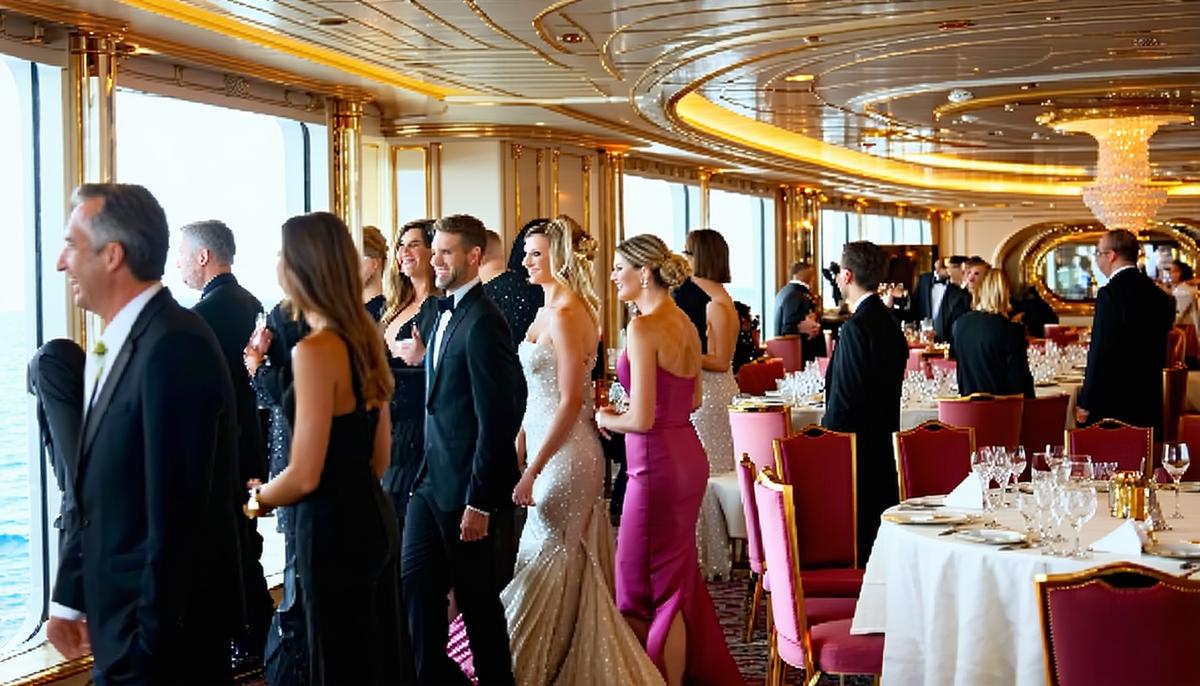
Formal dining venues require elegant attire like cocktail dresses or slacks with collared shirts. Casual settings allow more relaxed clothing, but swimwear should be covered when not at the pool. Versatile pieces can help transition from day to evening wear.
Cruise lines often provide specific guidelines for formal and casual nights. Practice politeness in shared dining spaces.
"Cruise line dress codes have come a long way since the Titanic. You will never have to don a gown or tuxedo to eat dinner on a modern-day cruise ship."
Most nights have a dressier version of casual, with shorts and ratty T-shirts banned but jeans allowed. One or two nights may be designated for fancier dress, similar to wedding guest attire.
Special Dietary Needs
Cruise lines accommodate various dietary needs. Inform the cruise line of requirements in advance, preferably at booking. On board, speak with the dining staff about your needs. Menus often highlight dietary-friendly options, and dishes can be customized.
Buffets usually label items, but pose a higher risk of cross-contamination. Specialty and main dining rooms offer more controlled environments for specific dietary needs.
Tips for Dietary Restrictions:
- Notify the cruise line 45-90 days before sailing
- Meet with the restaurant manager or head chef on embarkation day
- Request to see menus in advance
- Bring a list of your dietary needs to show staff
- Check the cruise line's policy on bringing your own food

Dining on a cruise offers diverse culinary experiences while traveling. From farm-to-table concepts on smaller ships to regional specialties reflecting the sailing route, cruise cuisine continues to evolve to meet changing tastes and preferences.
- Lalonde J. The Ultimate Guide to Cruise Ship Food. Cruise Critic. 2022.
- Smith P. Dining at Sea: What to Expect on Your First Cruise. Cruise Travel Magazine. 2021.
- Johnson M. Special Diets on Cruises: A Comprehensive Guide. Cruise Industry News. 2023.