
1. Don't Assume All-Inclusive
Many first-time cruisers mistakenly treat a cruise as an all-inclusive vacation. While main meals are generally covered, many activities and specialty dining options have additional fees. Without proper budgeting, vacationers might find themselves short on funds for these extras.
Key points to remember:
- Budget for extra expenses on board
- Specialty restaurants often have additional charges
- Popular activities may require separate fees
- Don't overlook gratuities, which can add up
It's wise to allocate some budget for these tips to avoid financial stress during your cruise vacation.

2. Be Punctual for Port Departures
Punctuality is crucial when cruising. Unlike a stationary hotel, cruise ships won't wait if you're running late. Each port offers a unique adventure, but it's essential to always keep the ship's schedule in mind.
Potential challenges:
- Unpredictable traffic conditions
- Misjudging travel time back to the port
- Unfamiliarity with local transportation
To prevent any last-minute panic, ask crew members about typical traffic conditions and plan to return with a comfortable buffer of time. Remember, the ship's schedule is inflexible – don't risk being left behind!

3. Don't Skip Travel Insurance
Travel insurance is an indispensable part of the cruise planning process. Cruises come with their own set of uncertainties, and if your arrival is delayed, you could miss the ship.
Most policies offer coverage for:
- Trip cancellations
- Medical emergencies
- Lost luggage
- Essential delays
Before your cruise departure, research different travel insurance options and choose a plan suited to your needs. Remember, it's better to have insurance and not need it than to need it and not have it.
4. Avoid Overbooking Excursions
While participating in excursions is a highlight of a cruise vacation, it's easy to get overzealous and fill every day with back-to-back activities. Consider prioritizing a handful of must-visit experiences, rather than attempting to see everything on offer.
"If you're like most people and you want some exciting days but some relaxing days, keep this in mind when you're booking your excursions and don't book one for every single day." – Lucy Southerton, Cruise Ship Worker
Start by researching the ports of call to identify the most unique sights and activities that resonate with your interests. By choosing quality over quantity in your excursion schedule, you'll return to the ship refreshed, rather than worn out.

5. Pay Attention to Safety Briefings
Safety briefings provide invaluable information that can make a difference in an emergency. During these briefings, the crew will outline how to find your designated muster station, an essential area where passengers gather during emergencies.
Key safety information to note:
- Location of your muster station
- Proper use of life jackets
- Emergency evacuation procedures
- Location of emergency exits
Familiarizing yourself with the layout of the ship, including the location of elevators and stairwells, ensures you're well-equipped to find your way around the vessel, even in the unlikely event of an emergency.

6. Research Your Ports of Call
Before you set sail, take the time to explore the offerings of each port of call. Researching ahead can reveal hidden gems and must-visit spots that align with your preferences.
Consider the following when researching ports:
- Local currency requirements
- Transportation options
- Cultural etiquette
- Popular attractions and their proximity to the port
- Local cuisine and dining recommendations
Some ports boast vibrant local markets or scenic spots that can be explored without booking an organized tour. For excursions that require a significant journey away from port, booking through the cruise line or reputable tour operators ensures you'll be back on time for departure.

7. Bring Essential Medications
As you prepare for your cruise, pack a comprehensive small medical kit. Include:
- Seasickness pills
- Pain relievers
- Antihistamines
- Personal medications
- Band-aids
- Antiseptic cream
- Sunscreen
- Aloe vera
While many ships have onboard medical facilities, being self-sufficient with your health needs means less time in the queue and more time enjoying your vacation. Purchasing medications while cruising can be expensive, so it's savvy to bring what you might need from home.

8. Pre-Book Activities and Dining
Popular restaurants and activities often fill up quickly on cruises. Before you embark, research the dining options and activities available on your cruise line's app or website.
Benefits of pre-booking:
- Guarantees your place at popular venues
- Allows for better planning of your cruise itinerary
- Reduces stress and last-minute disappointments
- Gives you more time to enjoy your cruise experience
Reserving in advance ensures you won't miss out on must-try experiences. While it's beneficial to anchor key experiences with reservations, allow room in your schedule for spontaneity. This balance will help you make the most of your cruise vacation.
9. Pack Crucial Items in Your Carry-On
Pack essentials in your carry-on for the first day of your cruise. Include:
- Phone chargers and portable battery packs
- Travel-sized toiletries (toothpaste, deodorant, face wash)
- Change of clothes or comfortable loungewear
- Swimwear if planning to use the pool on the first day
- Small notebook or novel for downtime
Having these items readily available ensures a smooth start to your cruise, especially if your main luggage arrives later in the evening. As Lucy Southerton, a cruise ship worker with 9 years of experience, points out: "Sometimes [luggage] can be much later in the day because the crew members can have between 3,000 and 10,000 pieces of luggage to sort through."

10. Choose the Right Cabin
Selecting an appropriate cabin enhances your cruise experience:
- For minimal motion, choose a cabin in the middle of the ship
- Avoid cabins near high-traffic areas or nightclubs for quieter stays
- Consider your view preferences: balcony suites for ocean vistas or interior cabins for budget-friendly options
- Book early for better cabin selection
- Use cruise apps to explore deck plans and cabin locations
Your cabin should provide comfort and align with your cruise priorities, whether that's easy access to amenities or a peaceful retreat. As Southerton advises, "Cabin location is going to play a huge part in [avoiding seasickness] so you want to be in the centre of the ship."
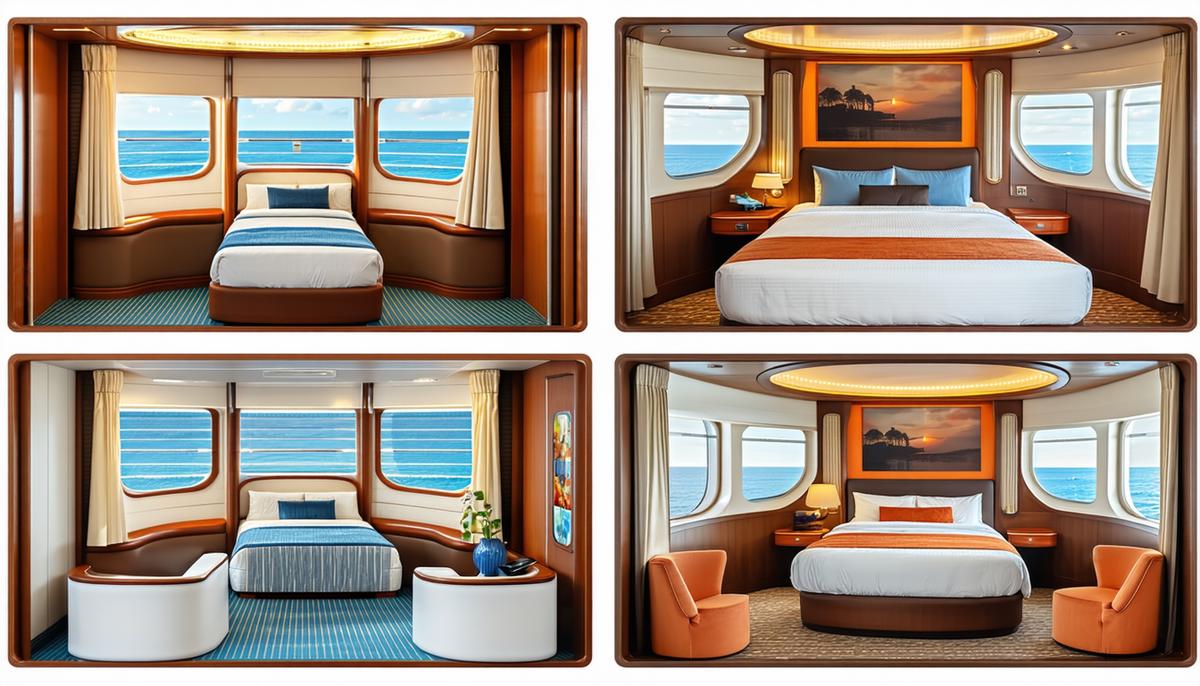
Choosing the right cabin is crucial for a comfortable cruise experience. Whether you prefer tranquility or stunning views, your cabin should be a haven of relaxation after a day of adventure. Remember, "The cheaper cabins will have a restaurant above them or a gym above them because it's going to be noisy so cabin location is really important."