
Origin and Meaning of Port and Starboard
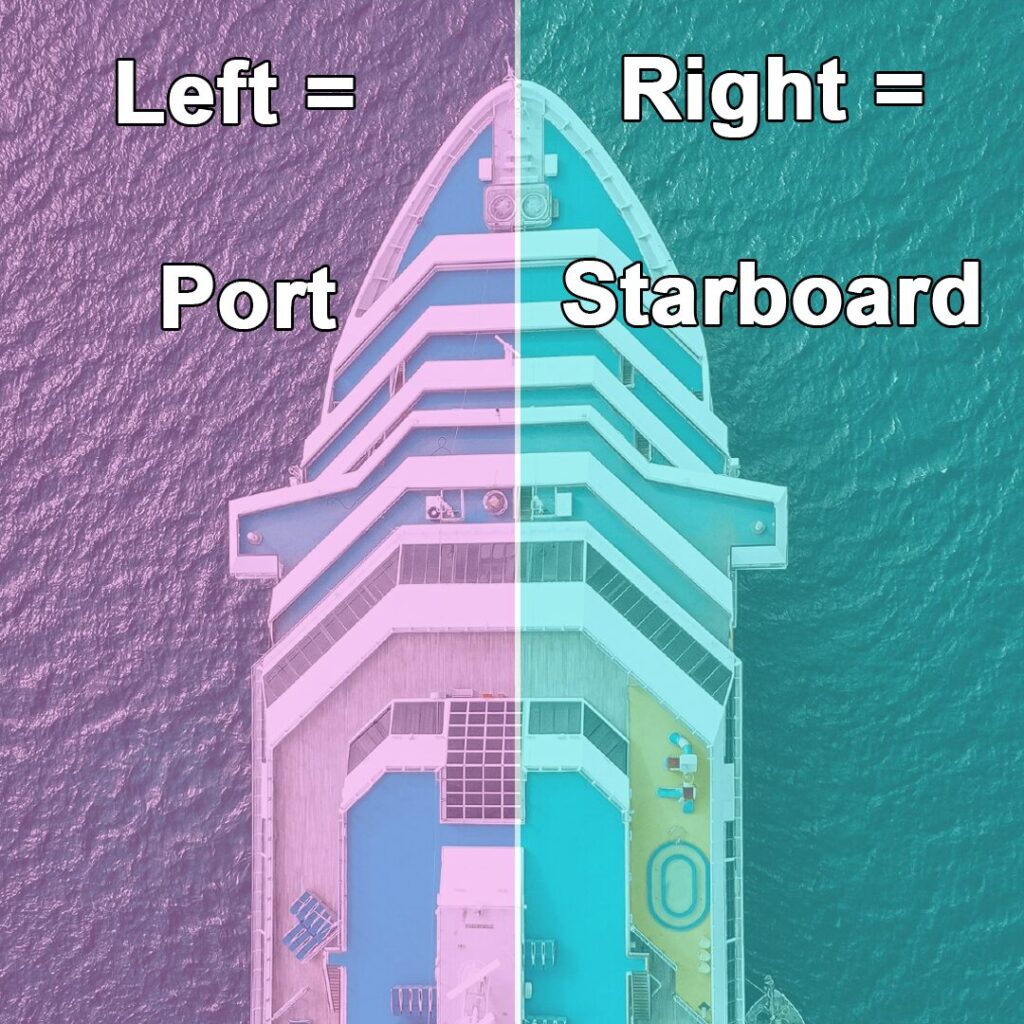
“Starboard” originates from Old English words “stéor” (steer) and “bord” (side of a boat). This term emerged when sailors used a steering oar on the right side of their ships.
The left side is “port,” originally called “larboard” (from “lade,” meaning to load). To avoid confusion, sailors adopted “port,” referencing the side facing the dock during berthing.
These terms remain crucial in modern navigation due to their clarity and permanence. Unlike left and right, which change with orientation, port and starboard stay fixed. Ships use:
- Red lights for port
- Green lights for starboard
This system helps identify vessel orientation and movement direction in low visibility.
The adoption of “port” and “starboard” showcases practical adaptations in maritime language, ensuring precision and safety at sea.
Practical Importance and Standardization
“Port” and “starboard” are essential in nautical terminology for ensuring clear communication on water. These terms provide universal reference points that remain consistent regardless of position or orientation—vital for quick decision-making to prevent accidents.
International adoption of these terms is a safety standard codified by regulations like the International Regulations for Preventing Collisions at Sea (COLREGS). These standards unify communication across vessels worldwide, from large ships to small boats.
Consistent use of these terms creates a shared language that improves teamwork aboard all types of ships. Whether coordinating docking or instructing crew during emergency drills, this universal vocabulary facilitates seamless and precise exchanges.
Remembering Port and Starboard
Here are some helpful mnemonics for remembering port and starboard:
- Word association: “Port” and “left” both have four letters.
- Visual cue: Picture a bottle of red port wine on the left side of the ship.
- Alphabetic trick: “P.S.”—Port is Starboard’s alphabetic neighbor, with “P” on the left.
- Tangible approach: Use a watch on your left wrist as an onboard reminder that port is on the left side.
With these methods, “port” and “starboard” will soon feel natural, helping you navigate confidently on your next cruise.
Understanding “port” and “starboard” isn’t just about correct terminology—it’s about embracing a tradition that improves safety and communication at sea. These terms are reliable companions for exploring the waters, whether aboard a large ship or a small boat.
"A sailor named RED, LEFT from the PORT"
This simple saying encapsulates the essence of port and starboard, providing an easy-to-remember guide for maritime navigation.1
- Why do ships use ‘port’ and ‘starboard’ and not ‘left’ or ‘right’. Safety4sea.com.